
Stories Connect Us
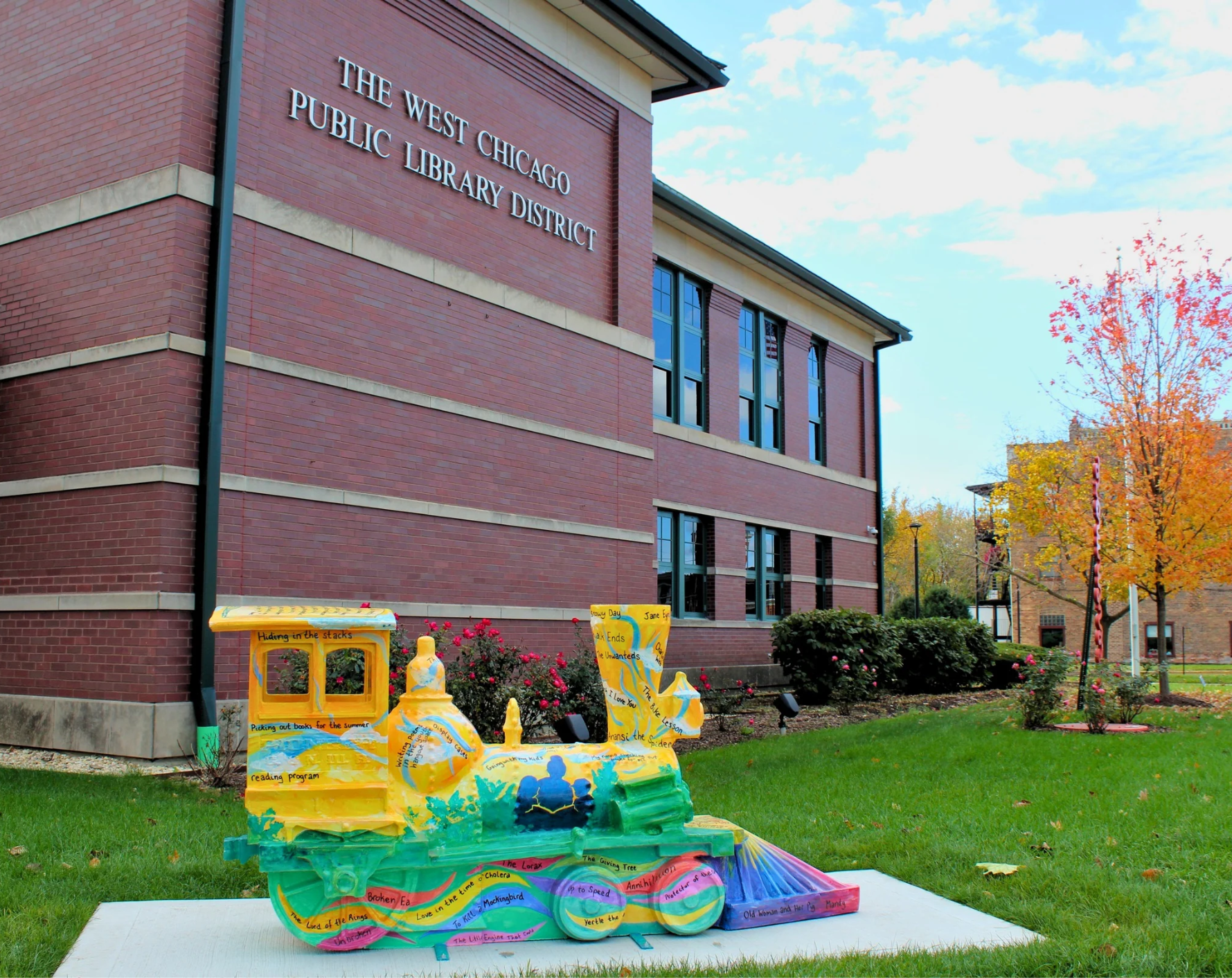
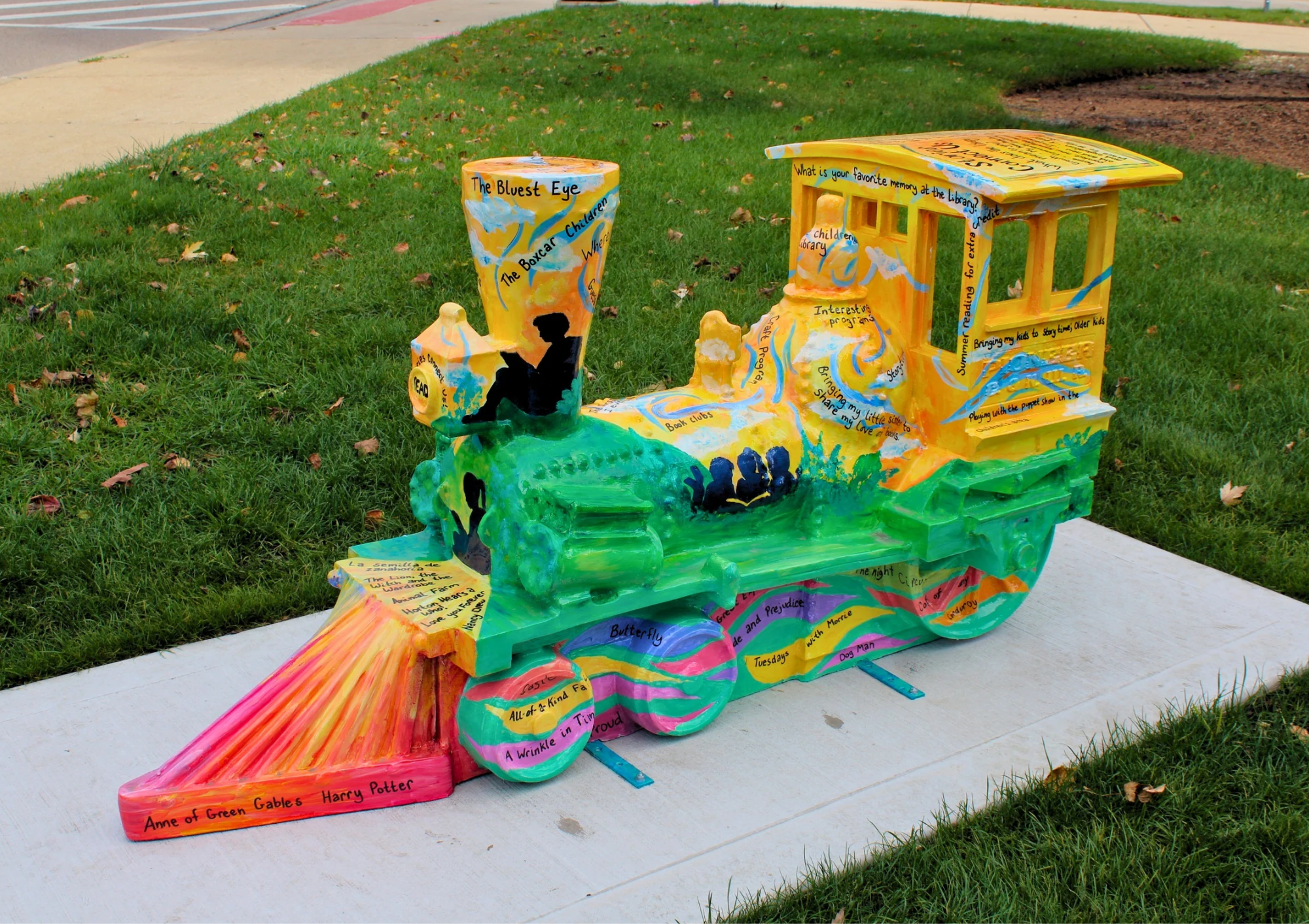
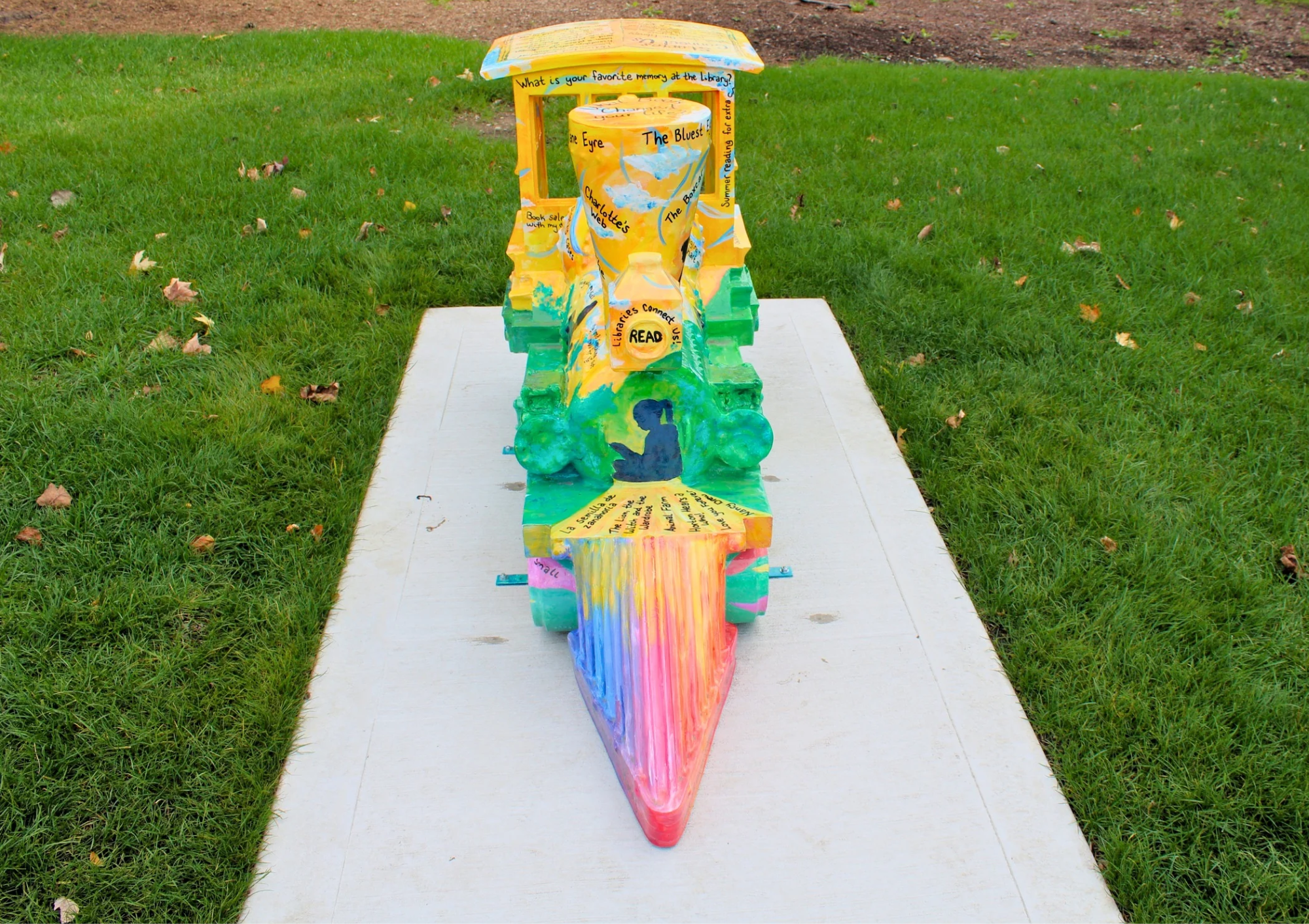
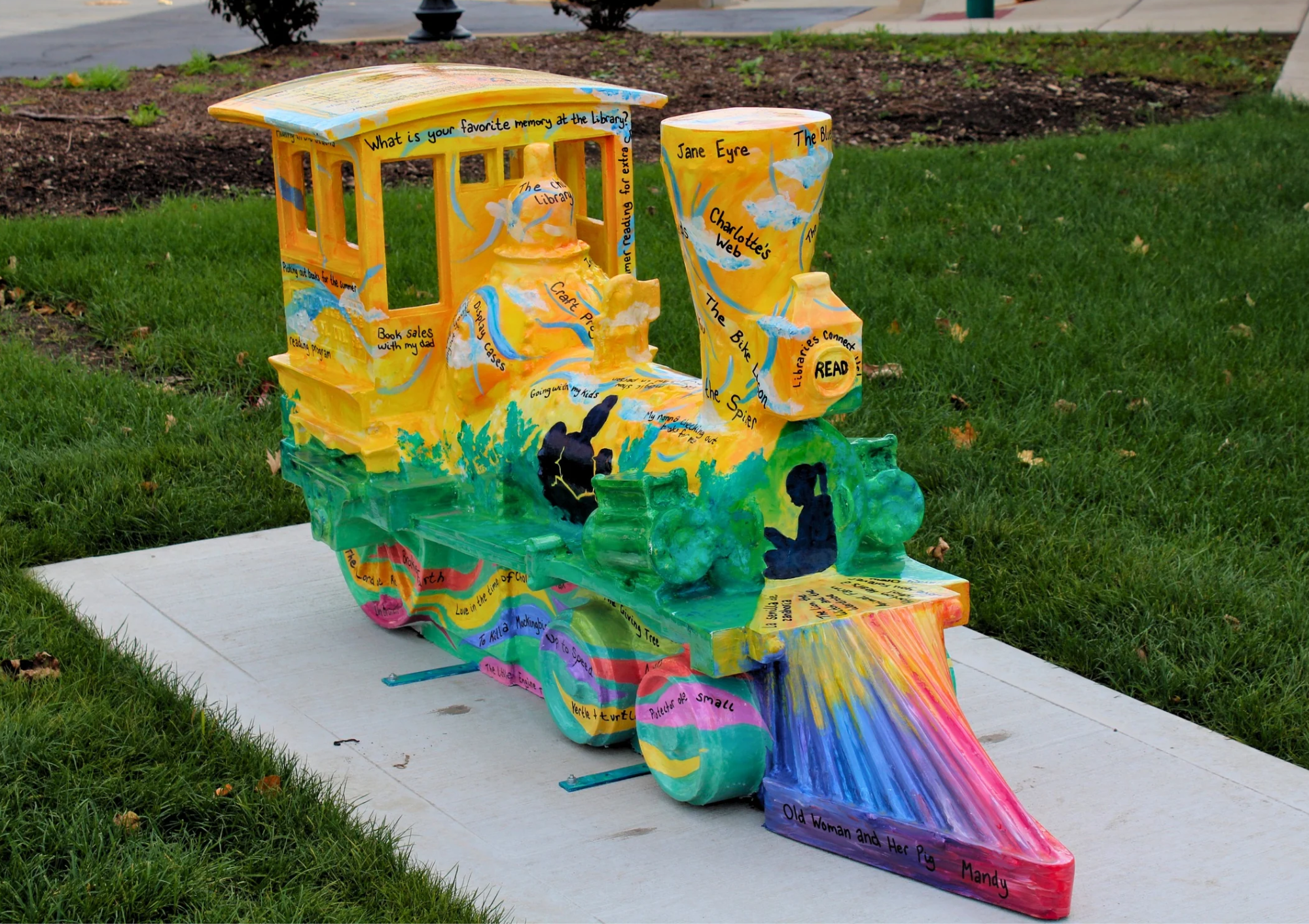
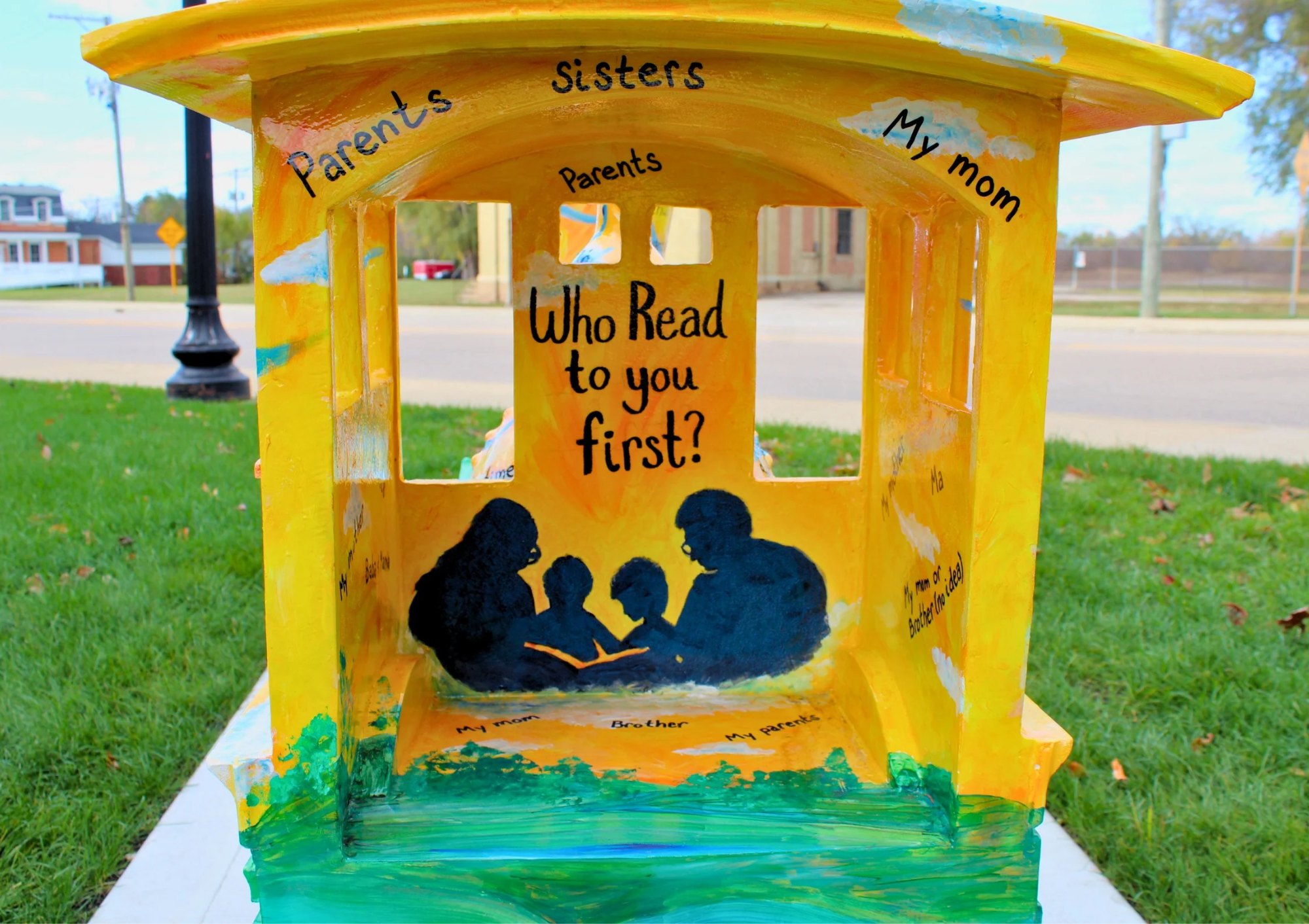
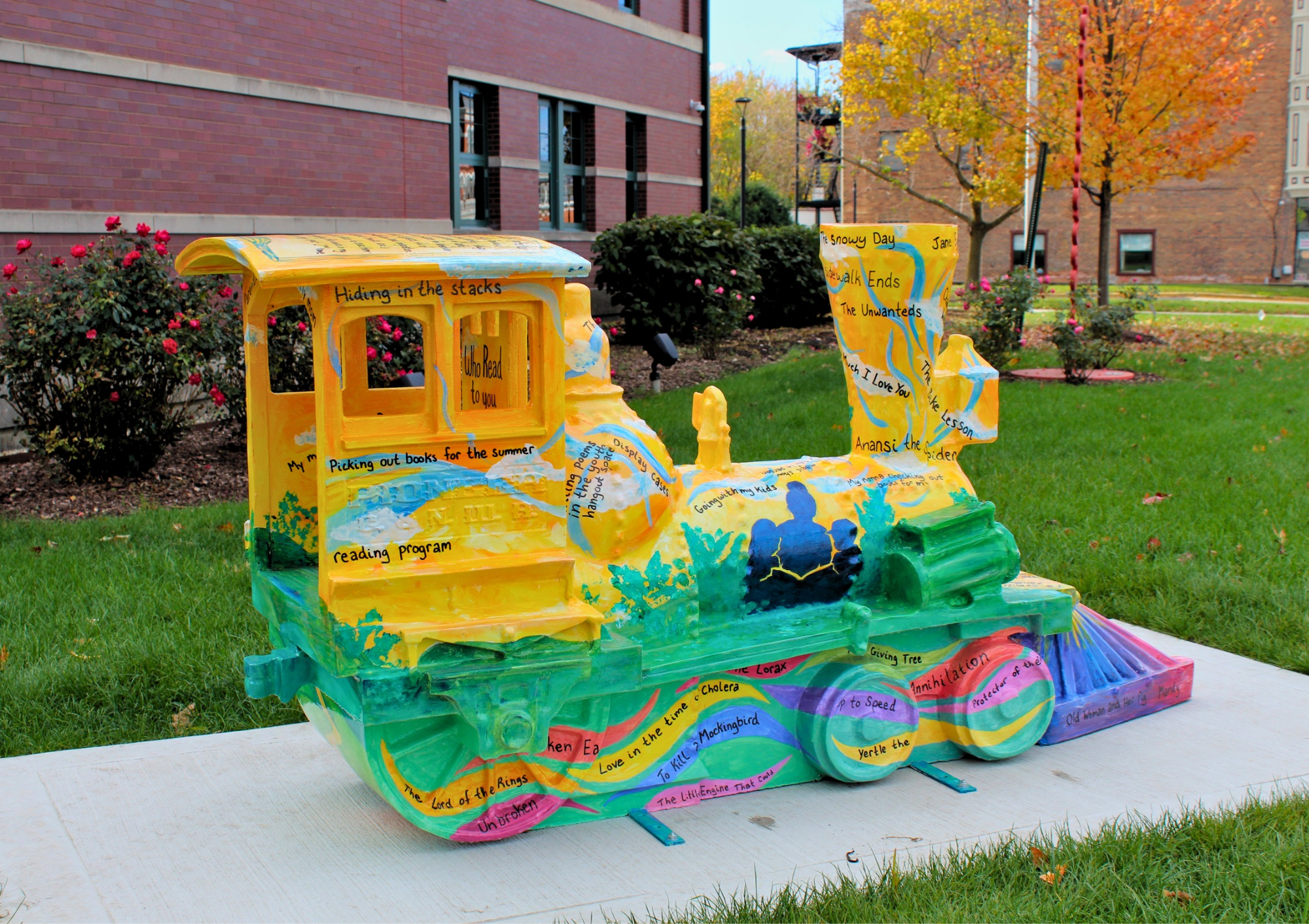
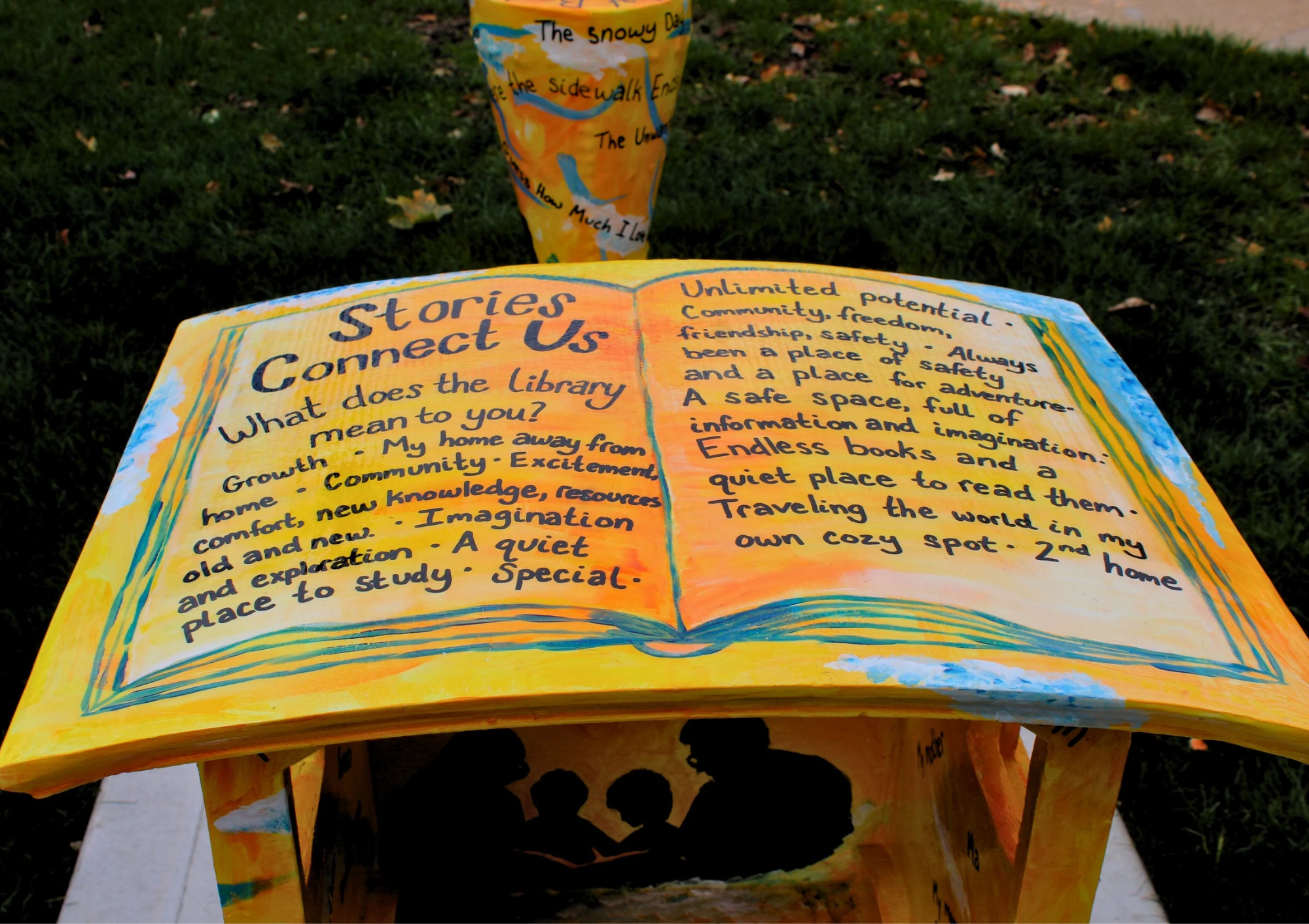
Stories Connect Us celebrates the people, memories, and experiences that connect us through reading and storytelling. The artwork is inspired by community responses about the library, reading, and the stories that stay with us. It brings together handwritten words, reading silhouettes, and colorful imagery. Each response represents a piece of our shared experience, honoring the people who read to us, the stories that shape us, and the connections we pass on to future generations.


Marisa Choate
Marisa Choate is an artist whose work centers accessibility, lived experience, and the belief that art should be encountered, not protected. Her practice spans painting, drawing, fiber-based installation, and participatory work, often exploring themes of disability, memory, movement, embodiment, and motherhood through layered materials and abstraction.
Choate’s work is rooted in personal and family history, particularly shared genetic and physical experiences related to disability. Rather than treating disability as absence or limitation, she approaches it as a source of knowledge, perspective, and form. Her work often externalizes interior experiences, making emotional and physical realities visible, tactile, and present in the body.
Motherhood has further shaped Choate’s practice, deepening her attention to care, time, vulnerability, and the physical realities of lived experience. This perspective informs both the content of her work and the ways in which audiences are invited to engage with it, emphasizing slowness, presence, and relational connection.
Accessibility is central to Choate’s practice. She actively challenges the ways traditional art spaces exclude disabled audiences by creating work that invites touch, participation, and multiple ways of experiencing meaning. She believes art does not need to last forever to matter, and that its value lies in connection, interaction, and shared presence.
Through both studio-based and site-responsive work, Choate seeks to create spaces where stories are held, noticed, and encountered slowly. Her work asks viewers to engage not just visually, but physically and emotionally, emphasizing that lived experience is a valid and essential form of knowledge.